
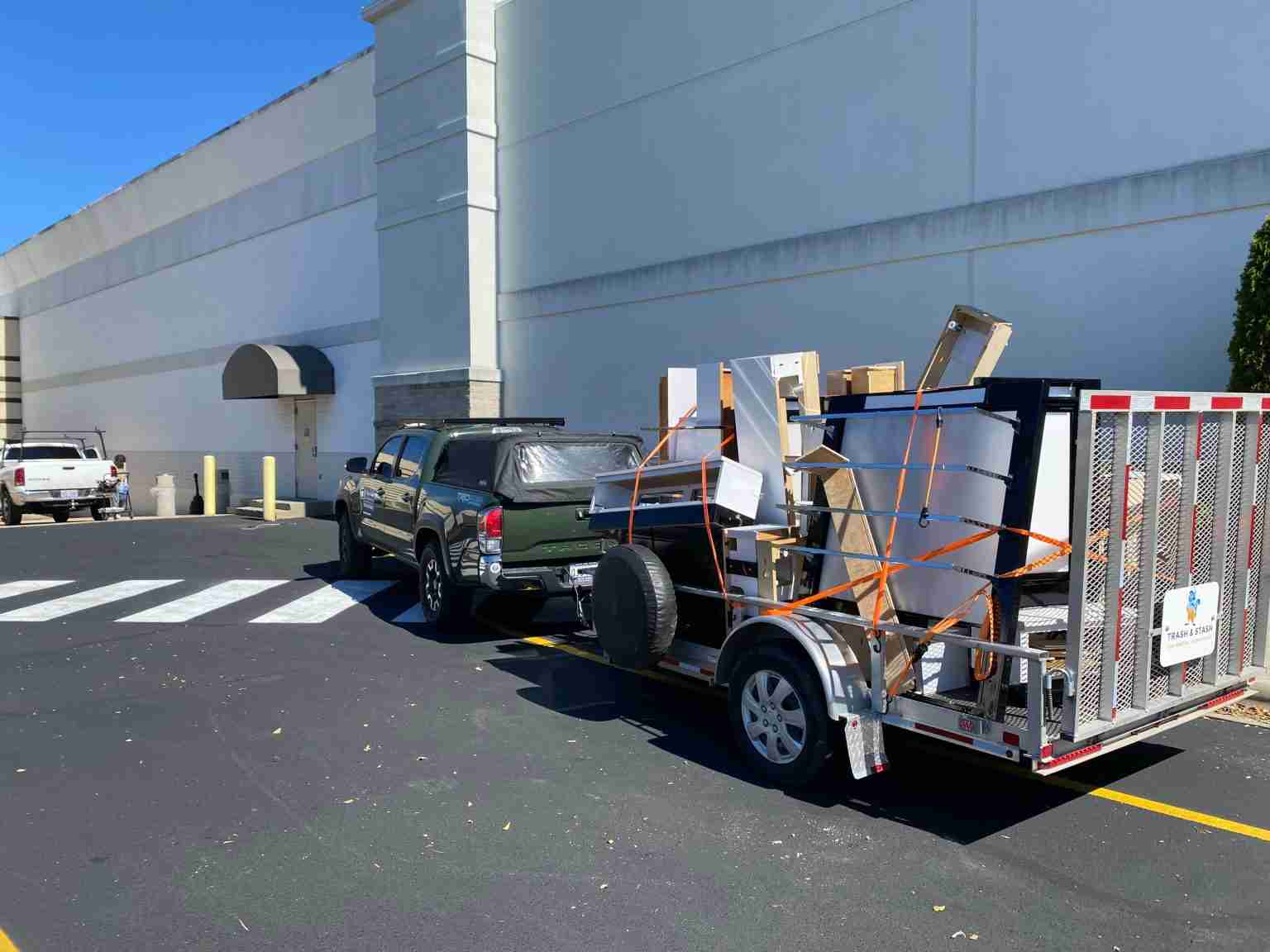
Ever wonder what happens to all the stuff a hotel replaces during a remodel? We’re talking beds, sofas, headboards, desks, lamps, even artwork. That whole bundle is called FF&E, and when it gets removed, it doesn’t just vanish into a dumpster. A lot of it slips into a hidden economy where furniture is sold, recycled, donated, repaired, or flipped for a second life.
The best part? It can save hotels money, help the environment, and put quality pieces back into circulation instead of sending them to landfills. From the moment a suite gets stripped down, a whole behind-the-scenes process kicks in. And it’s way more interesting than you’d think.
What is Hotel FF&E Removal and Why Do Hotels Replace Furniture Fixtures And Equipment So Often?
Hotel FF&E removal is the process of removing all furniture, fixtures, and equipment during renovations, rebrands, ownership changes, or property upgrades. That includes everything from beds, desks, and chairs to lamps, TVs, artwork, mini-fridges, and even bathroom fixtures.
If you’re wondering why hotels replace perfectly usable items so often, the answer comes down to perception, brand standards, and competition.
Hotels don’t operate on the same timeline as homes. A couch that looks “fine” to a homeowner might be unacceptable to a hotel brand that’s chasing consistency and ratings.
Here’s why FF&E turnover is so frequent:
- Brand refresh cycles: Many hotel brands require renovations every 5–7 years to maintain franchise agreements.
- Guest expectations: Travelers expect rooms to look modern, clean, and current, even if the furniture is still functional.
- Wear and tear: Hotel furniture endures heavy daily use. What looks solid may have internal damage or hygiene concerns.
- Rebranding or ownership changes: New ownership often wants a clean slate, visually and operationally.
- Market repositioning: A hotel upgrading from mid-range to boutique or luxury often replaces everything to match a new image.
The key point is this: hotels aren’t just swapping furniture. They’re protecting brand reputation and revenue.
A dated room doesn’t just look old. It affects reviews, nightly rates, and occupancy. So FF&E removal becomes a business decision, not a cosmetic one.
But once those items are removed, a new question takes over. What happens to all of it?
Where Does Removed Hotel Furniture and Equipment Go After an FF&E Renovation?
This is where the story gets interesting.
Contrary to popular belief, most hotel FF&E doesn’t go straight to the landfill. At least, not if the process is handled correctly.
Once items are removed, they typically fall into one of several paths:
Resale and secondary markets
A large portion of hotel furniture still has value. Beds, case goods, seating, lighting, and electronics can be resold through:
- Hospitality liquidators
- Wholesale resellers
- Secondary hotel operators
- Online bulk auction platforms
- Local resale channels
These items often end up in smaller hotels, motels, extended-stay properties, student housing, or furnished rentals.
Donations and nonprofit redistribution
Some FF&E inventory is donated to:
- Charities
- Transitional housing organizations
- Shelters
- Community organizations
- Disaster relief programs
This depends heavily on condition, timing, and logistics. Donation sounds simple, but coordinating transport, storage, and acceptance at scale is not easy.
Recycling streams
Items that can’t be reused are often broken down and recycled. This includes:
- Metal bed frames
- Appliances
- Electronics
- Certain plastics and composites
Proper recycling requires separation, compliance with local regulations, and documentation.
Controlled disposal
Unfortunately, some materials do end up as waste. Upholstered items with hygiene concerns, damaged particle board furniture, and mixed-material pieces are often not recyclable.
This is where professional FF&E removal companies matter. Improper disposal can create legal and environmental problems.
The path an item takes is influenced by:
- Condition
- Brand restrictions
- Timing of the renovation
- Local regulations
- Storage availability
- Labor costs
- Environmental commitments
The hidden truth is that FF&E removal is not about muscle. It’s about decision-making at scale.
How Do FF&E Liquidation and Hotel Asset Recovery Companies Make Money From Used Hotel Inventory?
There’s a misconception that FF&E removal is a cost center only. In reality, it’s often a value recovery operation when done right.
FF&E liquidation companies make money by extracting remaining value from removed assets while reducing disposal costs for the hotel.
Here’s how that works:
Buying inventory in bulk
Some asset recovery companies purchase FF&E inventory outright. Hotels get:
- Immediate removal
- Reduced disposal liability
- Partial cost recovery
The recovery company then resells items individually or in lots.
Revenue sharing models
In some cases, hotels partner with liquidation firms under a revenue split agreement. The company handles removal, resale, and logistics, and the hotel receives a percentage of proceeds.
This is more complex but can be profitable if inventory is in strong condition.
Arbitrage and market knowledge
Asset recovery companies understand where used hotel furniture has demand. A desk that’s worthless in one market might be valuable in another.
That knowledge is the business.
Avoided costs
Even when resale revenue is modest, avoiding landfill fees, labor costs, and compliance risks creates value.
From the hotel’s perspective, FF&E recovery helps:
- Offset renovation costs
- Reduce environmental impact
- Minimize operational disruption
- Stay compliant with disposal laws
From the recovery company’s perspective, profit comes from logistics, speed, and knowing how to move inventory efficiently.
This is not a glamorous business. It’s tight margins, fast timelines, and thousands of moving parts. But it’s real, and it’s growing as sustainability becomes more than a marketing line.
What are the Environmental and Compliance Risks Involved in Hotel FF&E Removal and Disposal?
This is the part most people don’t see, and where mistakes get expensive.
Improper FF&E removal isn’t just messy. It can create serious environmental and legal risks.
Environmental risks
Hotels generate massive volumes of waste during renovations. When FF&E is mishandled, it can lead to:
- Excess landfill use
- Improper disposal of electronics
- Release of hazardous materials
- Untracked waste streams
- Missed recycling opportunities
Items like TVs, refrigerators, and lighting often contain materials that require special handling.
Compliance and regulatory risks
Hotels are subject to local, state, and federal regulations related to:
- E-waste disposal
- Hazardous materials
- Data security (smart TVs, key systems)
- Documentation and reporting
Failure to comply can result in:
- Fines
- Project delays
- Reputational damage
- Legal exposure
Brand and ESG pressure
Large hotel brands face increasing scrutiny around environmental, social, and governance standards. How they handle FF&E disposal can impact:
- Investor relations
- Brand image
- Franchise agreements
- Public perception
Sustainability reports are no longer optional for many brands. Disposal practices matter.
Operational chaos
Poorly planned FF&E removal can disrupt:
- Renovation timelines
- Contractor schedules
- Guest experience (for phased renovations)
- Labor coordination
When removal companies aren’t equipped to handle scale, hotels feel it fast.
This is why professional junk removal and asset handling services play a critical role. It’s not about “hauling stuff away.” It’s about managing risk.
The Second Life Nobody Talks About
There’s something oddly poetic about hotel furniture’s journey.
A chair that once sat in a luxury suite might end up in a startup office. A dresser might land in a college apartment. A lamp might light a nonprofit workspace. Or it might get responsibly recycled into raw materials for something new.
That’s the hidden economy. It’s quiet, fast, and rarely noticed by guests sipping coffee in the lobby.
But it matters.
Handled well, FF&E removal:
- Reduces waste
- Recovers value
- Supports sustainability goals
- Keeps renovations on track
- Protects brands and operators
Handled poorly, it becomes a liability that lingers long after the renovation dust settles.
Hotels know this. Developers know this. And the companies operating in this space are evolving quickly to keep up.
When FF&E Removal Is Done Right, Nobody Notices
That’s the irony. The best FF&E removal jobs are invisible. The renovation stays on schedule. The waste is handled properly. The resale happens quietly. The property reopens polished and refreshed.
Guests never ask, “What happened to the old furniture?”
But behind the scenes, a lot of work went into making sure the answer wasn’t “we threw it all away and hoped for the best.”
When It’s Time To Clear The Space, Do It The Smart Way
Clear the Room, Keep the Value, Skip the Headaches
At Trash & Stash Junk Removal, we understand that large-scale removals aren’t just about getting things out. They’re about doing it responsibly, efficiently, and without creating new problems. Whether it’s hotel FF&E, commercial cleanouts, or complex removal projects, our team handles the logistics so you don’t have to worry about where everything ends up.
If you’re planning a renovation, clearing out inventory, or dealing with a high-volume removal that needs to be done right the first time, reach out to Trash & Stash Junk Removal and let’s turn chaos into a clean slate.

